


Matthews continues standing out in the Charlotte real estate market because it offers something many faster-growing suburbs are still trying to build: an established sense of place. While newer communities around the region often compete through fresh construction, large development phases, and expanding amenities, Matthews attracts buyers for a different reason. The area already feels complete.
For buyers searching across Charlotte homes for sale, Matthews often becomes more compelling once they begin comparing long-term livability rather than simply reviewing square footage, price, or commute distance. The town combines mature neighborhoods, recognizable local identity, community events, practical daily convenience, and access to major employment corridors throughout South Charlotte, Uptown Charlotte, Ballantyne, Monroe, Mint Hill, and Union County.
That combination gives Matthews a different kind of appeal than many surrounding suburbs. It is not trying to become the newest residential destination near Charlotte. It already has decades of neighborhood development, local businesses, schools, parks, healthcare access, and community traditions supporting its value.
Buyers who choose Matthews are often looking for more than a house. They are looking for a community that feels stable, connected, and functional from the first day they move in. That is what makes Matthews different from many suburban markets surrounding Charlotte. The appeal is not built only around what is coming next. It is built around what already works.
Many Charlotte-area communities are still in the middle of defining their identity. Matthews is different because much of that identity has already been formed. The town has grown over decades rather than through one short burst of residential expansion, which gives the local housing market a layered feel that newer suburbs often lack.
That maturity shows up in several ways. Neighborhoods often have established streetscapes, mature trees, long-term homeowners, completed infrastructure, and surrounding commercial districts that already support daily life. Buyers are not evaluating only what a community might become in ten years. In many parts of Matthews, they can already see how a neighborhood has aged, how homes have been maintained, how streets function, and how surrounding amenities support residents.
This matters because stability is one of Matthews’ strongest real estate advantages. Buyers comparing Matthews with newer growth corridors may find that Matthews offers fewer unknowns. Instead of wondering how a large new community will feel after future phases are completed, they can evaluate a market where many neighborhoods already have a proven track record.
That does not mean every home or neighborhood performs the same way. Matthews still requires careful comparison. A renovated home near Downtown Matthews may appeal to a different buyer than a larger home near the Union County side of the market, a townhome near shopping, or an executive property in a more established community. However, the broader market benefits from a level of residential maturity that continues attracting buyers who value long-term confidence.
That confidence is one of the reasons Matthews remains relevant through different housing cycles. When buyers become more selective, communities with established infrastructure, broad housing variety, recognizable identity, and practical daily convenience often remain competitive. Matthews is not dependent on one single buyer profile, one builder, one subdivision, or one development corridor. Its demand is spread across several types of buyers and several types of housing.

One of the most important things to understand about Matthews is that buyers usually choose it for a different set of reasons than they choose places like Ballantyne, Indian Land, Waxhaw, Fort Mill, Pineville, or Indian Trail.
Someone looking at the Ballantyne Charlotte NC homes for sale and local living guide may be drawn to corporate access, newer commercial development, modern apartment and townhome options, and South Charlotte convenience. A buyer focused on Indian Land SC homes for sale may prioritize newer construction, South Carolina tax advantages, and growth along the Highway 521 corridor. A buyer comparing Waxhaw NC homes for sale may want more land, luxury communities, school-focused relocation options, or a quieter Union County setting.
Matthews occupies a different lane.
Matthews appeals to buyers who want established neighborhoods, a recognizable downtown, practical access to Charlotte, and a community that already has strong local rhythms. The town feels less like a blank canvas and more like a place with existing roots. For many buyers, that is the point.
They are not necessarily looking for the newest subdivision or the largest growth corridor. They want sidewalks that already connect to familiar streets, parks that already serve the community, shopping districts that are already part of daily routines, and neighborhoods that have already shown they can remain desirable over time.
This is why Matthews frequently appeals to buyers who have already lived in newer suburban areas and now want something more settled. They may still want convenience, good access, neighborhood amenities, and updated homes, but they also want a stronger sense of permanence. Matthews often becomes attractive because it feels less temporary and more rooted than many markets still being shaped by large-scale expansion.
One of the strongest signs of a desirable community is not only how many people want to move there. It is how many people choose to stay. Matthews benefits from a homeowner base that often remains connected to the area through multiple stages of life. Residents may change homes, renovate, downsize, or move into a different neighborhood, but many still want to remain close to the same community.
That loyalty is not accidental. Matthews gives residents practical reasons to stay. Daily errands are convenient. Healthcare access is nearby. Parks, greenways, local events, youth activities, restaurants, and shopping options are woven into the area. Downtown Matthews gives the town an identity that feels more personal than many commercial corridors. Mature neighborhoods create a residential atmosphere that can be hard to replace once homeowners become accustomed to it.
For families, Matthews can feel like a place where routines become familiar quickly. Schools, sports, parks, grocery stores, favorite restaurants, library visits, community events, and weekend activities often remain close enough to create a strong sense of local rhythm. For professionals, Matthews provides access to employment centers while offering a quieter residential return point at the end of the day. For downsizers, the town provides convenience without requiring a move into a denser urban setting.
This loyalty matters from a real estate perspective because it supports consistent demand. A market where people want to remain tends to have more internal movement. Homeowners may sell one Matthews property and purchase another. Buyers may enter the area for a starter home and later move up. Empty nesters may sell a larger property and choose a lower-maintenance option nearby. That cycle helps Matthews remain active across different price points and life stages.

Matthews has character because it was not built all at once. The community grew through different eras, housing styles, commercial patterns, and neighborhood types. That history gives Matthews a texture that is hard to recreate in newer development areas.
Some neighborhoods offer traditional ranch homes, split-level layouts, and mature landscaping. Others include larger move-up homes, golf-course settings, townhome communities, executive properties, and renovated homes with updated interiors. Downtown Matthews adds another layer through local restaurants, coffee shops, breweries, community events, and civic gathering spaces that help the town feel distinct from surrounding suburbs.
That variety makes Matthews especially interesting for buyers who do not want every neighborhood to feel identical. A buyer can compare established residential streets near downtown, family-oriented subdivisions, townhomes close to shopping, homes near healthcare access, or properties with easier routes toward South Charlotte and Union County.
Because the area developed over time, Matthews offers a broader mix of housing experiences than many buyers initially expect. This is one reason the market continues attracting first-time buyers, move-up buyers, downsizers, relocation clients, and long-term homeowners. Different stages of life can often be served within the same broader community.
The difference becomes especially noticeable when buyers tour multiple neighborhoods in one day. Matthews does not feel like a single product type repeated across a large development area. Streets, home styles, landscaping, lot sizes, and neighborhood layouts can change quickly. That variety requires more careful evaluation, but it also gives buyers more ways to find a home that matches their priorities.
One of Matthews’ strongest long-term advantages is that residents often have reasons to stay even when their housing needs change. In some suburbs, buyers may start in one home but eventually need to leave the area entirely when they want a larger property, a different school path, a lower-maintenance option, or a downsizing opportunity. Matthews offers more flexibility.
A buyer may begin in a townhome or smaller single-family home, later move into a larger established neighborhood, and eventually downsize into a lower-maintenance property without leaving the community. That ability to move within the same town helps strengthen local demand because people are not forced to abandon Matthews when their lifestyle shifts.
This matters for resale as well. A market with multiple buyer stages often has more durable demand. First-time buyers, growing families, professionals, retirees, and downsizers may all be looking at Matthews for different reasons. That broad buyer pool gives sellers more ways to position a property when the time comes to list.
Buyers reviewing property buyer resources often focus first on the home itself. In Matthews, it is equally important to think about how the surrounding community may support life over many years. A strong Matthews purchase is not only about whether the home works today. It is also about whether the neighborhood, commute, schools, amenities, and future resale audience will continue making sense later.
This is also why Matthews can appeal to buyers who are thinking beyond their immediate needs. A household may want a home that works for young children today but still functions when schedules, work patterns, or family structure changes. Another buyer may want a property that can be renovated gradually rather than replaced quickly. Someone planning to retire may prioritize access to healthcare, errands, parks, restaurants, and community connection. Matthews supports those different timelines better than many communities built around one dominant buyer type.
Relocation buyers often begin the Charlotte-area search by focusing on names they have heard most often: Uptown, SouthPark, Ballantyne, Fort Mill, Waxhaw, or newer growth corridors south and southeast of the city. Matthews may not always be the first area they research, but it frequently becomes more compelling once buyers begin comparing how they will actually live day to day.
That shift usually happens after buyers move beyond basic map distance. On paper, a home in a newer suburb may look larger or newer. A neighborhood closer to a major employment center may appear more convenient. Another area may seem more prominent because it has more new development. Matthews becomes stronger once buyers compare commute flexibility, established retail access, parks, downtown character, healthcare proximity, housing variety, and community stability together.
Relocation buyers also tend to appreciate predictability. Moving into a new region already involves uncertainty. Choosing a community with established infrastructure, mature neighborhoods, and a clear local identity can help reduce some of that uncertainty. Matthews gives buyers the ability to evaluate what already exists rather than relying heavily on future promises.
For buyers who want to understand how Matthews fits into the larger region, it can help to compare the area against nearby communities such as Indian Trail, Pineville, and Myers Park. Each area serves a different lifestyle, but Matthews often stands out for buyers who want suburban practicality without losing community character.

Established neighborhoods represent one of Matthews’ greatest strengths, but buyers should avoid assuming every mature community offers the same ownership experience. Homes constructed during similar time periods may look comparable online while providing very different long-term value once factors such as maintenance history, renovation quality, lot characteristics, neighborhood investment, and surrounding property conditions are considered.
One of the advantages of buying within an established community is that buyers are evaluating neighborhoods with a proven history instead of relying on future projections. Streets are already landscaped, traffic patterns have largely stabilized, homeowners have invested in improvements over many years, and community identity has had time to develop naturally. Rather than imagining how a neighborhood might mature twenty years from now, buyers can see exactly how previous decades have shaped the area.
However, maturity should never be confused with uniformity. Even within the same subdivision, ownership experiences can differ significantly. One section may contain extensively renovated homes with updated landscaping and strong curb appeal, while another portion of the neighborhood may consist of largely original homes requiring substantial future improvements. Careful evaluation often reveals differences that online listing photos cannot capture.
When touring Matthews neighborhoods, buyers should spend time looking beyond the individual property. Sidewalk conditions, street appearance, homeowner maintenance, tree canopy, drainage, traffic flow, nearby commercial activity, and neighborhood entrances all contribute to long-term desirability. These characteristics influence everyday living just as much as kitchen finishes or bathroom renovations.
Neighborhood consistency also deserves careful attention. Communities where homeowners continue investing in maintenance and improvements often demonstrate stronger overall appeal. Updated landscaping, exterior renovations, replacement roofs, modern windows, outdoor living areas, and thoughtful additions frequently indicate a healthy pattern of reinvestment that benefits surrounding property owners as well.
Matthews contains neighborhoods that have matured exceptionally well because residents continued improving their homes instead of allowing them to become outdated. That ongoing investment creates communities where older homes compete successfully against newer construction because buyers appreciate both the established setting and the modern updates completed over time.
Purchasing an established home requires buyers to think somewhat differently than they would when purchasing new construction. While newer homes often emphasize builder warranties, standardized layouts, and modern systems, established homes require a broader evaluation that balances character, condition, maintenance history, renovation quality, and future ownership costs.
That does not make established homes more difficult to purchase. Instead, it changes the questions buyers should ask throughout the process. Rather than focusing primarily on finishes and floor plans, buyers should evaluate the home’s complete ownership history whenever possible. Understanding previous renovations, major system replacements, roof age, HVAC updates, plumbing improvements, electrical modernization, window replacements, foundation work, and drainage improvements provides valuable insight into future maintenance expectations.
Inspection periods become particularly important in communities where homes vary significantly in age and renovation history. Two houses built within the same year may have dramatically different maintenance records depending on how previous owners cared for the property. One home may have undergone extensive modernization over the past decade while another may require substantial improvements shortly after closing.
Many buyers initially focus on cosmetic finishes because those features are immediately visible during showings. Experienced homeowners often recognize that structural condition, mechanical systems, insulation improvements, grading, moisture management, and overall maintenance history typically have a much greater influence on long-term ownership satisfaction than new countertops or freshly painted walls.
Fortunately, Matthews offers many examples of established homes that have been thoughtfully modernized while preserving the character that originally attracted buyers to the neighborhood. These properties often combine mature lots, established surroundings, and updated interiors that provide an attractive balance between traditional neighborhood appeal and contemporary living.

One of the most overlooked advantages of Matthews is something that cannot be built quickly: mature landscaping. While buyers often concentrate on square footage, kitchens, bathrooms, and community amenities, established trees and thoughtfully landscaped neighborhoods contribute significantly to the overall living experience.
Large hardwood trees provide shade, privacy, seasonal color, and visual character that newer developments frequently require decades to achieve. Streets lined with mature landscaping often feel quieter, more welcoming, and more established than recently completed subdivisions where young trees have only recently been planted.
This environmental maturity also influences neighborhood perception. Buyers frequently describe established Matthews communities as comfortable, peaceful, and welcoming long before they begin comparing individual homes. Those impressions are often created by landscaping, lot spacing, and neighborhood design rather than any one property itself.
Larger lots found throughout portions of Matthews further enhance this feeling. Additional outdoor space provides greater flexibility for entertaining, gardening, recreation, home additions, and privacy between neighboring homes. While lot sizes naturally vary throughout the community, buyers comparing Matthews with newer suburban developments often notice these differences immediately during neighborhood tours.
Although mature trees require ongoing maintenance, many homeowners consider them one of the community’s defining assets. Combined with established landscaping and decades of neighborhood growth, they help create an atmosphere that distinguishes Matthews from many recently developed residential markets throughout the Charlotte region.
Many buyers begin their home search by comparing bedrooms, bathrooms, garages, and square footage. Those characteristics certainly matter, but experienced homeowners often discover that neighborhood selection influences long-term satisfaction just as much as the home itself.
Two houses with nearly identical floor plans may provide dramatically different ownership experiences depending on surrounding traffic patterns, neighborhood upkeep, school assignments, nearby parks, commercial development, commuting routes, and overall community atmosphere. Matthews contains enough neighborhood diversity that buyers benefit from comparing entire communities instead of focusing solely on individual listings.
For some households, proximity to Downtown Matthews becomes a significant priority because they enjoy restaurants, local events, farmers markets, and walkable gathering spaces. Other buyers may prioritize quieter residential streets, golf-oriented communities, larger lots, convenient Interstate access, or proximity to employment centers throughout South Charlotte and Union County.
School assignments, neighborhood amenities, HOA expectations, surrounding commercial activity, and future redevelopment opportunities may all influence long-term ownership in different ways. Buyers who spend additional time understanding these neighborhood differences frequently make more confident purchasing decisions because they are selecting both a home and a lifestyle rather than simply comparing property features.
This is one area where local market knowledge becomes particularly valuable. Matthews developed gradually over several decades instead of through one coordinated master-planned expansion. As a result, neighborhoods located only minutes apart may feel surprisingly different. Understanding those subtle differences often helps buyers narrow their search more effectively while avoiding communities that may not align with their long-term priorities.
Price naturally plays an important role during every home search, but buyers often benefit from comparing Matthews through the lens of lifestyle rather than focusing exclusively on purchase price or price per square foot. Two similarly priced homes may support completely different daily routines depending on neighborhood setting, accessibility, nearby amenities, and long-term ownership goals.
Some buyers place the highest value on community involvement, seasonal events, local businesses, and established neighborhood identity. Others prioritize commute flexibility, access to healthcare, outdoor recreation, lower-maintenance ownership, or the ability to remain within the same community through multiple life stages. Matthews accommodates each of these priorities in different ways.
The community also compares differently depending on which nearby market buyers are considering. Someone comparing Matthews with Ballantyne may focus on neighborhood maturity versus newer development. Buyers comparing Matthews with Fort Mill may weigh South Carolina tax considerations alongside community identity and established housing. Those evaluating Indian Land may compare newer construction against mature neighborhoods, while buyers looking at Indian Trail often evaluate differences in neighborhood age, commercial development, and overall community atmosphere.
Viewing Matthews through these broader lifestyle comparisons helps buyers identify which community best supports not only today’s needs but also the way they hope to live for many years after closing.
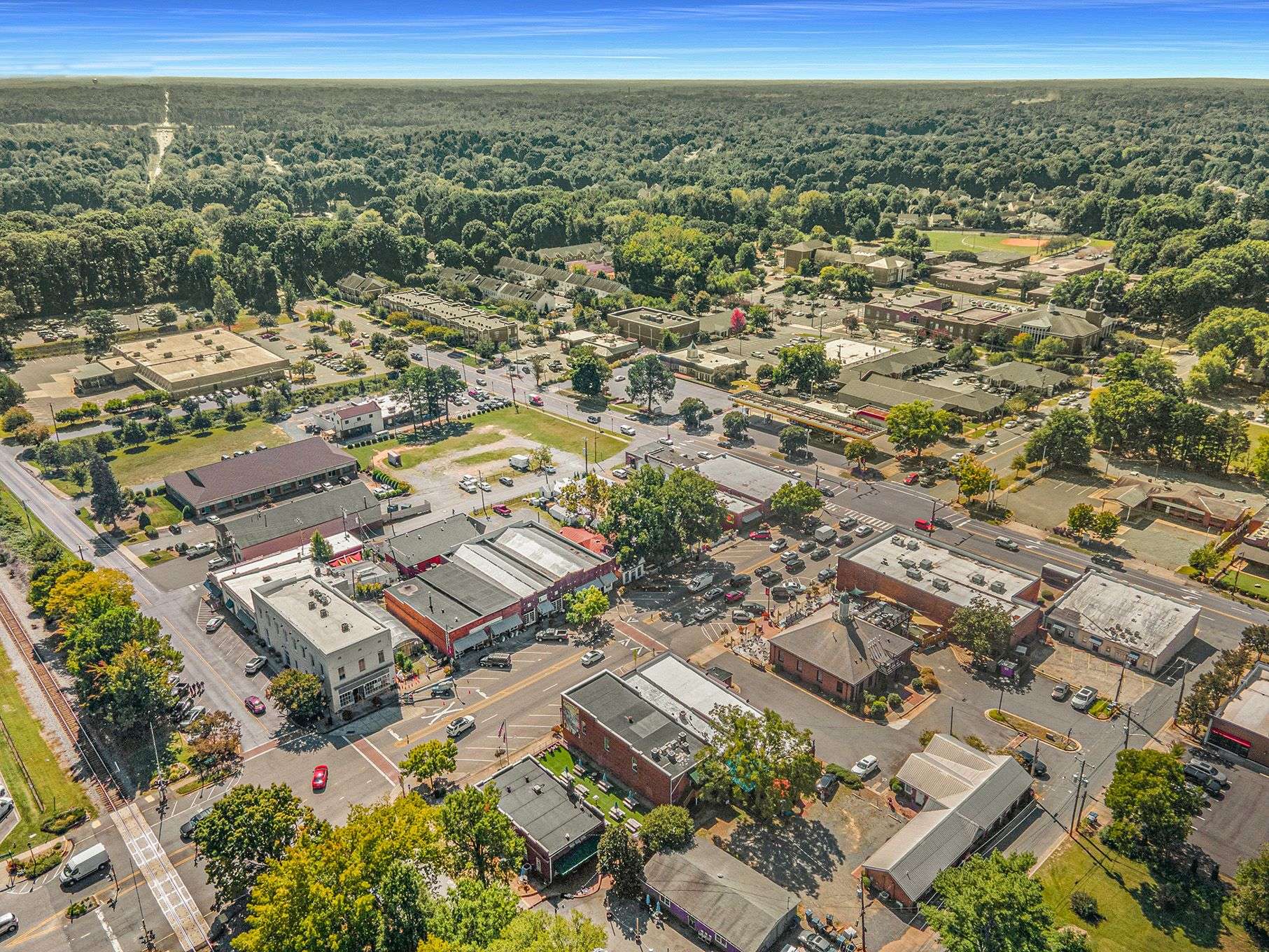
Unlike many of Charlotte’s fastest-growing suburbs, Matthews is not expanding primarily through massive master-planned developments. Instead, much of its evolution occurs through thoughtful redevelopment, home renovations, infill construction, commercial reinvestment, and long-term property improvements completed by existing homeowners. While these changes may not generate the same headlines as entirely new communities, they often have a greater influence on neighborhood quality and long-term market stability.
Driving through Matthews today reveals a community that continues improving without dramatically changing its identity. Older homes are being modernized with updated floor plans, expanded kitchens, renovated primary suites, improved outdoor living spaces, energy-efficient systems, and refreshed landscaping. Local shopping centers continue welcoming new businesses, restaurants evolve alongside changing demographics, and healthcare facilities expand to serve a growing population. Rather than replacing Matthews’ character, these investments help preserve it while adapting to modern expectations.
This pattern of gradual reinvestment creates opportunities for buyers who understand how mature markets evolve. A neighborhood does not need hundreds of newly constructed homes to increase its appeal. Consistent homeowner investment, responsible commercial development, updated public spaces, and community pride often produce equally meaningful improvements over time.
Buyers touring Matthews should pay attention not only to the home they are considering but also to signs of broader neighborhood investment. Updated neighboring homes, well-maintained common areas, attractive landscaping, renovated commercial centers, improved roadways, and active local businesses frequently indicate healthy long-term community investment that benefits surrounding property owners.
One question many buyers ask is why Matthews remains so competitive despite surrounding communities offering thousands of newly constructed homes. The answer extends well beyond housing inventory. Matthews competes because buyers increasingly recognize that long-term quality of life involves much more than purchasing the newest property available.
A new home may offer modern finishes, open living areas, and builder warranties, but many buyers eventually begin placing equal value on established surroundings, neighborhood identity, mature landscaping, practical convenience, and proven long-term desirability. Matthews delivers many of those qualities without requiring buyers to sacrifice access to Charlotte employment centers, shopping districts, healthcare providers, or recreation opportunities.
The community also benefits from decades of completed infrastructure. Roads, schools, parks, retail centers, churches, healthcare facilities, and municipal services already support daily life throughout much of Matthews. Buyers are not relying heavily upon future development plans to complete the community because most of those investments have already occurred.
This established foundation helps Matthews remain competitive regardless of housing cycle. Whether buyers prioritize newer finishes or traditional neighborhood charm, Matthews offers enough housing diversity to remain relevant across changing market conditions.
Matthews attracts a wide variety of buyers, yet many approach the community using assumptions that can limit their home search. One of the most common mistakes is evaluating Matthews solely against the newest suburban developments throughout the Charlotte region. While comparisons with communities like Ballantyne, Indian Land, Fort Mill, and Indian Trail are certainly valuable, Matthews serves a different purpose within the market.
Another frequent mistake involves focusing almost exclusively on cosmetic updates. Attractive kitchens, flooring, paint colors, lighting fixtures, and staging often capture immediate attention, but those features rarely determine long-term ownership satisfaction. Neighborhood quality, surrounding property maintenance, lot characteristics, accessibility, school assignments, traffic patterns, and future resale potential usually have a much greater impact over the life of homeownership.
Some buyers also underestimate the value of walking or driving through neighborhoods at different times of day. Morning traffic, afternoon school activity, evening neighborhood use, weekend events, and overall street atmosphere may reveal characteristics that are impossible to identify during a single showing appointment.
School assignments present another important consideration. Buyers sometimes assume homes located only a few streets apart share identical attendance zones. In reality, school boundaries can vary considerably. Confirming assignments early helps buyers avoid surprises while making more informed purchasing decisions.
Working with experienced local professionals and reviewing current Charlotte real estate market reports helps buyers evaluate Matthews within the broader regional market while understanding the subtle neighborhood differences that influence long-term ownership.
Unlike communities that primarily attract one type of homeowner, Matthews continues serving buyers across nearly every stage of life. This diversity has become one of the area’s greatest strengths because demand is supported by multiple buyer groups rather than depending upon one demographic.
Young professionals appreciate convenient regional access and attainable entry points through townhomes or smaller single-family homes. Growing families value established neighborhoods, community involvement, parks, recreational opportunities, and housing variety. Move-up buyers often find larger homes within neighborhoods that have demonstrated long-term stability. Empty nesters and retirees appreciate lower-maintenance ownership opportunities, healthcare accessibility, and a community where everyday necessities remain close at hand.
Because Matthews accommodates changing lifestyles, many residents never feel compelled to leave the community altogether. Instead, they simply transition into different neighborhoods or housing styles as their needs evolve. That pattern strengthens the local housing market while reinforcing Matthews’ reputation as a long-term destination rather than simply a temporary stop within the Charlotte region.

Much discussion surrounding Charlotte-area real estate focuses on future growth, new development, and expanding suburban corridors. Matthews presents a different long-term story. Its greatest advantage may actually be that much of the community has already matured.
Large-scale residential expansion becomes increasingly difficult as available land becomes more limited. Rather than competing through endless new subdivisions, Matthews is positioned to benefit from continued reinvestment within existing neighborhoods, thoughtful redevelopment, commercial improvements, and ongoing homeowner investment. Communities that successfully balance modernization with preservation often maintain broad appeal because they continue evolving without losing the characteristics that originally attracted buyers.
Future improvements throughout Matthews will likely occur through carefully planned commercial projects, infrastructure enhancements, neighborhood renovations, updated public spaces, improved recreational facilities, and continued private investment rather than dramatic outward expansion. Buyers considering long-term ownership should recognize that these gradual improvements often strengthen established communities over time.
Although no housing market can guarantee future appreciation, Matthews benefits from several characteristics that continue attracting buyers: established neighborhoods, completed infrastructure, strong community identity, practical convenience, diverse housing options, and close proximity to Charlotte employment centers. Those advantages remain difficult for newly developing communities to replicate quickly.
Perhaps Matthews’ greatest strength is that it has never needed to reinvent itself to remain relevant. While surrounding communities continue defining their identity through new construction and rapid expansion, Matthews has spent decades building a reputation based on stability, community involvement, and everyday livability.
Historic Downtown Matthews remains central to local life. Community events continue bringing residents together. Established neighborhoods maintain strong identities. Local businesses contribute to a recognizable sense of place. Parks, greenways, schools, and public gathering spaces support daily routines that extend far beyond individual subdivisions.
Buyers increasingly recognize these qualities because they become more meaningful after the excitement of moving into a new home fades. Years after closing, homeowners often remember neighborhood relationships, community involvement, convenient daily routines, nearby parks, local businesses, and the overall feeling of belonging far more than they remember cabinet colors or flooring selections.
Matthews succeeds because it offers a community that feels authentic rather than manufactured. Its character developed gradually through decades of residents, businesses, neighborhoods, civic investment, and local traditions working together to create one of Charlotte’s most consistently desirable suburban markets.
Whether you are purchasing your first home, relocating from another state, upgrading to accommodate a growing family, downsizing into a lower-maintenance property, or preparing to sell your current home, Matthews deserves to be evaluated as more than a collection of listings on a map. Understanding neighborhood maturity, long-term ownership trends, redevelopment patterns, resale potential, and community identity often leads to better real estate decisions than simply comparing square footage or asking price.
The team at High Performance Real Estate Advisors works closely with buyers and sellers throughout Matthews while also helping clients compare nearby communities including Ballantyne, Fort Mill, Indian Land, Indian Trail, Pineville, Waxhaw, and Myers Park. Comparing these communities side by side helps buyers identify the market that best supports both current priorities and long-term goals.
Matthews has earned its reputation through decades of thoughtful growth, homeowner investment, strong community identity, and lasting buyer demand. While many communities continue searching for what makes them unique, Matthews has already established that foundation. For buyers looking beyond today’s transaction and focusing on years of ownership ahead, that may be one of the area’s greatest competitive advantages.
